Walking your child to school or a local park should be a peaceful daily routine. For many parents living in dense, car-centric cities, it feels more like an exercise in survival. You grip their hand tightly at the crosswalk, checking over your shoulder for distracted drivers making aggressive right turns. The sheer volume of fast-moving metal passing mere feet from your family is enough to cause severe daily anxiety.
These fears are completely valid and backed by alarming data. The danger on our roads is a growing national crisis. In fact, pedestrian deaths have increased 78% since 2009. They now account for nearly a fifth of all crash fatalities nationwide.
Protecting your family requires looking beyond bad drivers. We must understand how poor urban infrastructure actively contributes to traffic violence. When city streets prioritize vehicle speed over human life, tragedies happen.
The good news is that parents are not powerless against these hazards. You have legal rights to hold powerful municipal entities accountable when their infrastructure fails to keep your children safe.
Identifying the Most Dangerous Corridors
Urban planners and city officials track traffic violence meticulously. They use this data to identify specific street segments where accidents happen repeatedly. This cluster of dangerous roads is known as a High Injury Network, or HIN.
Understanding what a High Injury Network is helps parents map out safe walking routes. A city’s HIN is usually a very small fraction of its total street map. However, these specific corridors produce an incredibly disproportionate amount of carnage.
The local data is shocking. For example, Los Angeles’ High Injury Network represents just 6% of city streets but accounts for nearly 70% of severe pedestrian injuries and deaths.
When a tragedy strikes on these specific corridors, families often blame a single distracted or speeding driver. While driver fault is a factor, the underlying cause is frequently systemic negligence. The road was simply designed in a way that made a severe accident inevitable.
Holding a city or developer accountable for that kind of systemic negligence is exactly where a wrongful death lawyer in Los Angeles steps in. Taking on a massive local government is completely overwhelming for any family to handle on their own. A legal team takes over the entire process to prove the street was unsafe long before the crash ever happened. By managing this larger legal fight and dealing with the municipal red tape, they make sure the family gets the financial support they need to move forward without the added stress.
Why Wide Arterial Streets Are Uniquely Lethal for Children
Not all streets carry the same level of risk. The most dangerous environments for pedestrians in Los Angeles are wide arterial streets. These are the multi-lane, highway-like roads that often run directly through residential neighborhoods and commercial districts.
Arterial streets are designed to move a massive volume of vehicles as quickly as possible. They prioritize driver convenience and speed over the safety of the people living, walking, and playing nearby. The resulting human toll is staggering. Statistics show that 60% of pedestrian deaths occur on high-capacity urban roads with speed limits of 45-55 mph.
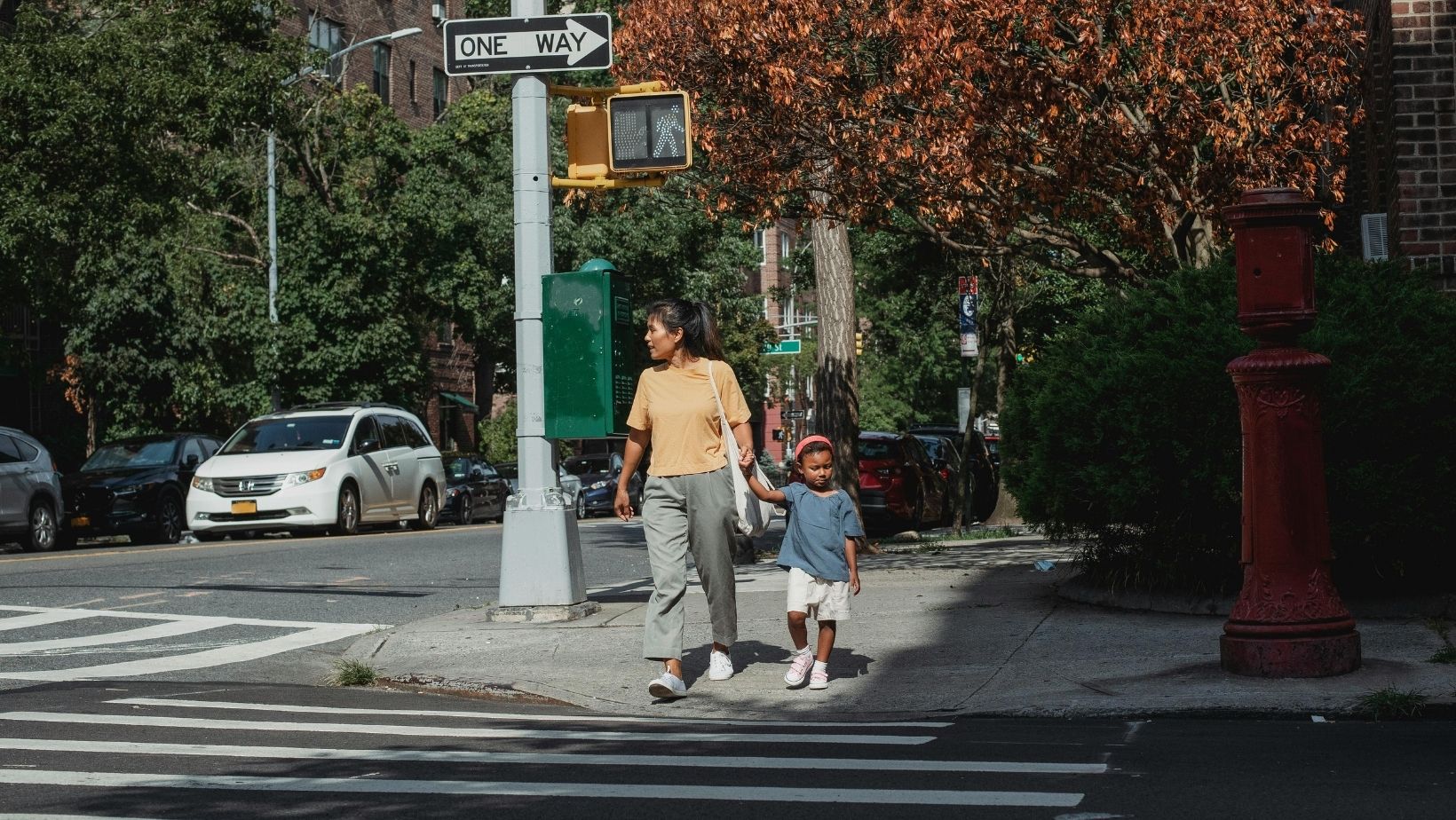
Children face unique physical vulnerabilities in these fast-moving environments. Their smaller stature makes them incredibly difficult for speeding drivers to see, especially over the hoods of large modern SUVs and trucks. Children also lack the developmental ability to accurately judge vehicle speeds and distances.
To make matters worse, many of these arterial roads lack basic modern safety countermeasures. Cities frequently delay implementing simple fixes. A “road diet” can reduce lane widths to naturally slow traffic down. Leading Pedestrian Intervals (LPIs) can give walkers a head start at crosswalks before cars get a green light. When these features are missing on a 50 mph road, children are left completely unprotected.
Systemic Negligence vs. Driver Error
When a child is injured by a car, the immediate public reaction is to find the at-fault driver. Did they run a red light? Were they texting? While individual driver error is a critical piece of the puzzle, focusing entirely on the driver lets the city off the hook.
We need to shift our mindset toward systemic negligence. This means looking at the broader failures in city planning, street design, and basic road maintenance. A driver might make a mistake, but a poorly designed road turns that mistake into a fatality.
Municipal Accountability: When the City Fails to Protect
Many parents wonder if they can actually sue a powerful city government for a dangerous crosswalk. The short answer is yes. Cities have a fundamental legal duty to maintain safe public spaces.
In California, municipal liability is largely governed by California Government Code Section 835. In simple terms, this law states that a public entity is liable for injuries caused by a dangerous condition on its property.
To hold a city accountable, a family must prove a few specific things. First, the road or crosswalk must have posed a substantial risk of injury when used with due care. Second, the city must have known about the danger—or should have known about it—and failed to fix it within a reasonable amount of time.
A city’s failure takes many forms. It might involve ignoring a backlog of community complaints about a blind corner. It frequently involves failing to implement promised safety initiatives. When cities fail to execute these promised safety upgrades on their High Injury Networks, they leave themselves open to liability.
You have the right to demand safe streets. When powerful entities fail to protect vulnerable road users, parents possess the legal tools to demand accountability.
Conclusion
Protecting your children on busy city streets requires constant personal vigilance. You hold their hands, you teach them to look both ways, and you navigate your neighborhood with extreme caution. But personal vigilance is no longer enough. We must hold municipalities to a much higher standard of safety.
By familiarizing yourself with your local High Injury Network like in Los Angeles, you can identify and avoid the most dangerous corridors in your community. More importantly, by understanding your legal rights, you can recognize when a tragedy is the result of a city’s failure to design safe streets.