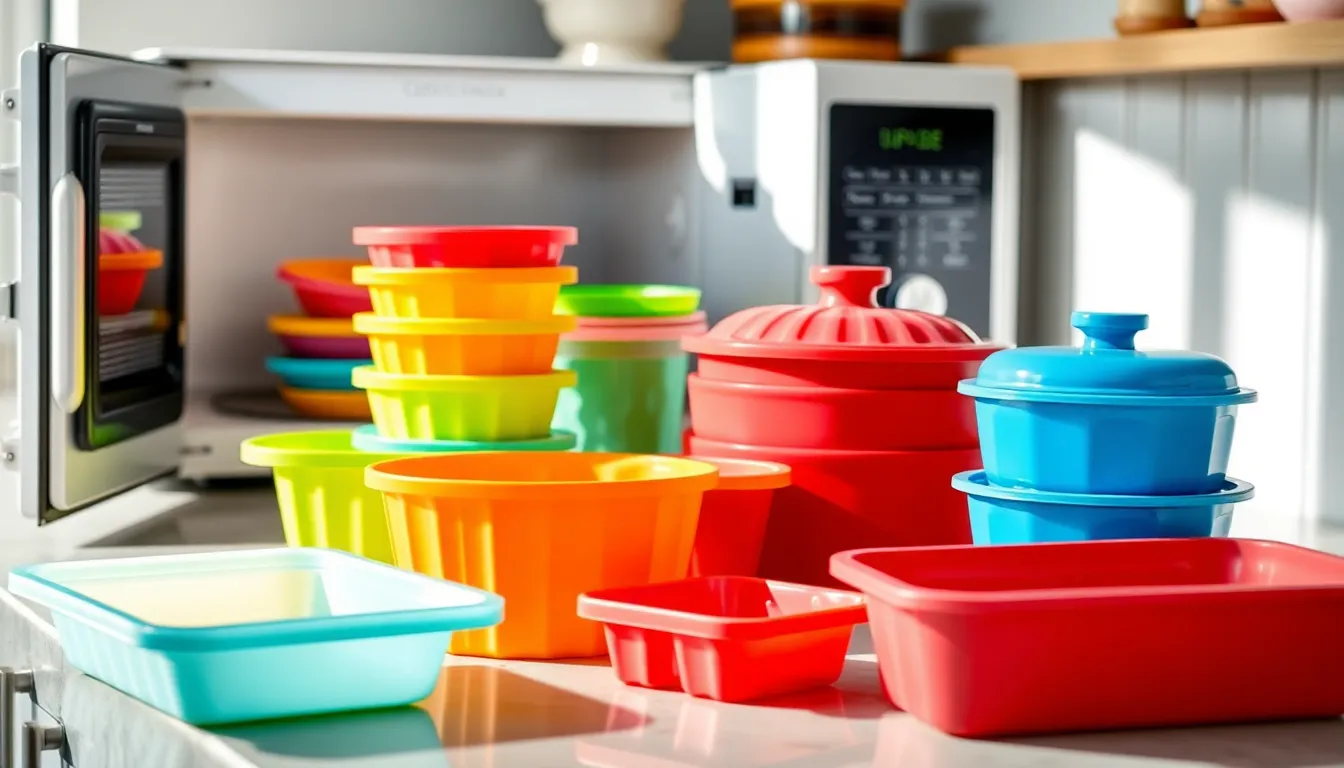
Silicone bakeware has taken kitchens by storm, promising easy release and hassle-free cleanup. But as it sits on the counter, a burning question lingers: can silicone really handle the heat of a microwave? It’s the culinary equivalent of asking if a cat enjoys a bath—everyone has an opinion, but few know the truth.
Understanding Silicone
Silicone plays a significant role in modern bakeware, offering benefits such as flexibility and heat resistance. The material has unique properties that make it a popular choice in kitchens.
What Is Silicone?
Silicone is a synthetic polymer made from silicon, oxygen, carbon, and hydrogen. Its structure provides a non-stick surface, allowing for easy release of baked goods. Resistant to extreme temperatures, silicone typically endures heat up to 500°F (260°C) without warping. Non-toxic and chemically stable, it also doesn’t leach harmful substances into food. Many people appreciate silicone for its durability and longevity, as it can last for years with proper care.
Types of Silicone Used in Cookware
Different silicone types exist in cookware, each with specific applications. Food-grade silicone is the most common, approved for direct contact with food. Platinum-cured silicone, known for its high quality, maintains its properties longer and is often used for professional-grade products. Liquid silicone rubber works well for molds and flexible mats, offering excellent heat resistance. Comparatively, lower-quality silicones may contain fillers that compromise safety and performance. Selecting high-grade silicone ensures optimal results in cooking and baking.
Safety of Silicone in the Microwave
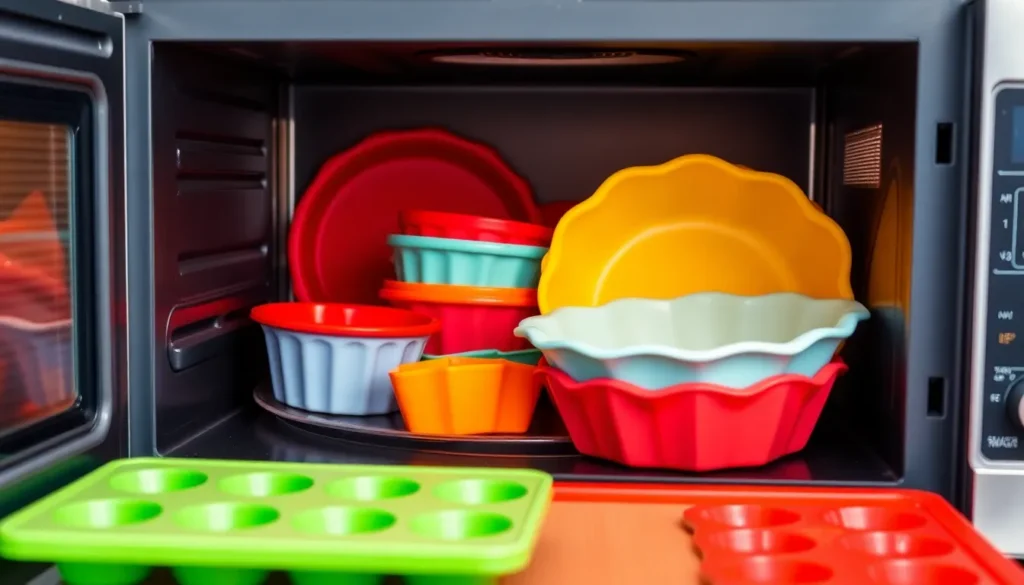
Microwave safety of silicone bakeware continues to be a topic of interest. Understanding its heat resistance and potential hazards helps in making informed choices.
Heat Resistance of Silicone
Silicone withstands high temperatures, up to 500°F (260°C), without losing its shape or performance. Flexibility enhances its usability in various cooking methods. Many users appreciate silicone’s ability to handle both microwave and oven environments. Despite its robustness, some factors can influence heat retention and distribution during use. Cooking times might need adjustment based on the density of the silicone material.
Potential Hazards of Using Silicone in the Microwave
While silicone is safe for microwave use, certain precautions are necessary. Low-quality silicone may contain fillers that compromise safety. Such fillers can lead to leaching harmful chemicals into food when heated. Observing visual cues, like changes in texture or discoloration, signals potential issues. Always ensure the silicone brand is food-grade to avoid these risks. Observant users notice that proper usage and maintenance significantly reduce hazards while enjoying the convenience of silicone cookware.
Benefits of Using Silicone in the Microwave
Silicone cookware offers numerous advantages when used in the microwave. Silicone’s unique properties make it especially suitable for various cooking tasks.
Versatility and Flexibility
Silicone molds and containers adapt easily to different shapes and sizes. Its flexible nature allows for easy removal of baked goods and meals. Users can implement silicone for baking, steaming, or freezing without losing its integrity. Heat resistance up to 500°F enables it to safely transition from the microwave to the oven. Additionally, silicone withstands sudden temperature changes, making it a reliable choice for diverse cooking methods.
Easy Cleanup and Storage
Cleanup becomes a breeze with silicone cookware. Food hardly sticks to its surface, allowing for straightforward washing. Most silicone items are dishwasher-safe, enhancing convenience for busy cooks. Storage also proves efficient as silicone is collapsible and stackable. Users can store multiple silicone items without consuming significant space. Long-lasting durability adds to its appeal with resistance to wear and tear over time.
Recommendations for Using Silicone in the Microwave
Silicone can be a great option for microwave cooking when used correctly. Awareness of the right products and safety tips enhances the cooking experience.
Choosing Microwave-Safe Silicone Products
Select silicone bakeware that specifically states it is microwave-safe. High-quality, food-grade silicone usually meets safety standards, ensuring a non-toxic cooking experience. Look for platinum-cured silicone, which is often more durable and less likely to contain harmful fillers. Prioritize products from reputable brands that provide clear labels about microwave suitability. Verify the temperature ratings; those rated for at least 500°F (260°C) indicate their resistance to extreme heat.
Tips for Using Silicone Safely
Adjust cooking times based on the thickness of the silicone material, as thicker items may take longer to heat. Use silicone products away from direct contact with microwave walls to prevent potential overheating. Always inspect the silicone for any signs of damage or wear before use. Avoid using low-quality silicone to ensure minimal risk of chemical leaching. Covering food with a silicone lid or wrap can help retain moisture while preventing splatters. When cleaning, follow manufacturer instructions for care as some items may require hand washing.
Silicone bakeware offers a blend of versatility and convenience that many home cooks appreciate. Its ability to withstand high temperatures and adapt to various cooking methods makes it a valuable addition to any kitchen. While silicone is generally safe for microwave use, it’s crucial to choose high-quality options and follow recommended guidelines for optimal safety and performance. By being mindful of the type of silicone used and adhering to best practices, individuals can enjoy the benefits of this innovative material without compromising their health or cooking results. Embracing silicone in the kitchen can lead to easier meal prep and cleanup while ensuring delicious outcomes.